Skater Style
Skateboarding was, at first, tied to surf culture. As skateboarding spread across the United States, to places unfamiliar with surfing or surfing culture, it developed an image of its own. For example, the classic film short Video Days portrayed skateboarders as reckless rebels who don't give a fuck about society.

The image of the skateboarder as a rebellious, non-conforming youth has faded in recent years. The rift between the old image of skateboarding and a newer one is quite visible: magazines such as Thrasher portray skateboarding as dirty, rebellious, and still firmly tied to punk, while other publications, Transworld Skateboarding as an example, paint a more modern, diverse, and controlled picture of skateboarding stars. Furthermore, as more professional skaters use hip-hop music accompaniment in their videos, many urban youths and hip-hop fans are drawn to skateboarding, further diluting the sport's punk image.
The general public is opposed to skateboarding, attempting to ban it from public areas. Skateboarders just want to be able to skate public spots such as handrails and sets, which wrecks the paint on the rails. This forces skaters to sneak into spots, tresspass, and avoid the police just in order to skate.
Clothing and fashion is a personal skater choice. One can be gangsta (baggy clothes, fitted baseball caps, high top shoes), hesher (striped sweaters, tight clothes) or somewhere in between, someone who just rocks jeans and tshirts that fit.
Submitted by: Chris PecoraBDSM New Wave
 is a term that has been used to describe many developments in music, but is most commonly associated with a movement in Western popular music, in the late 1970s and early 1980s inspired by the punk rock movement. New Wave music was initially marketed as a more commercial or chart-friendly version of punk.

The cover of Blondie's album Parallel Lines depicts the band wearing classic New Wave fashions.New Wave fashions were a conscious reaction to the hippie styles of the 1960s, which had spilled over into the mainstream by the late 1970s[citation needed]. Thus, flares and long hair for men were replaced by more body-conscious clothing and shorter, often spiky, hairstyles. The tight-fitting suits and thin ties worn by Blondie on the cover of their album Parallel Lines epitomise the New Wave look, which harks back to the rock and roll styles of the pre-hippie era.
Another aspect was a desire to embrace contemporary synthetic materials as a protest and celebration of plastic. This involved the use of spandex, bright colors (such as fluorescents), and mass-produced, tawdry jewelry and ornaments, typified by the dayglo aesthetic of the band X-Ray Spex. As a fashion movement, then, New Wave was both a post-modern belief in creative pastiche and a continuation of Pop Art’s satire and fascination with manufacturing. An important offshoot of new wave fashion was the New Romantic movement, which emphasized androgyny and extensive use of synthetic-looking cosmetics for both genders.
New Wave revivalists are currently very popular in New York, Boston and LA (centering around nightclubs like New York’s Misshapes, Boston's Manray nightclub, and featured in art and fashion magazines like Visionaire). The style has also recently been a major influence in high fashion, for example in the most recent collections of designers like Scott Gerst and Hedi Slimane (Creative_director of Dior Homme.)
Source: WikipediaFolk Music
They enjoy both playing and listening to it. Folk music is music that has a heritage linked to the traditional music styles of a region. In most industrialized areas folk music is in decline except where it is seen as a badge of cultural identity. In mainstream music obvious examples of folk music include the work of singer/song writers Bob Dylan and Joni Mitchell. Other popular examples include rap, country, jazz, and blues which originally were folk music traditions, but have evolved and changed to become different from their original style.
Celtic music traditions have had a large stylistic influence on what is commonly perceived as folk music.
The Scottish ballads
Bonnie Barbara Allen and
Twa Corbies are relatively well known, as well as the works of Loreena Mckennitt.
Traditional music and World music are both terms that can be used to describe Folk music. However some groups that actively play music from living folkloric traditions use the term Traditional music to clarify the difference between what they are playing and what popular music calls folk music. World music is a term that is most often used to describe all non-Western music traditions.
Also check out:
Vancouver Folk Music FestivalSubmitted by: Niyanna HitchensCosplay
Cosplay is an alternative culture originating in Japan. The word cosplay is a merge between the words costume and play. Started in Japan, cosplay is gaining trend in many parts of the world including North America.
Cosplay is essentially a subculture on dressing as characters from anime, manga, video games, or Japanese pop/rock bands. Cosplayers in Japan wear costumes and gather in public places to show off their handmade creations, take pictures, and sometimes participate in best costume contests.
Although cosplay has quite a number of followers in North America, at this point they mostly parade their costumes at exclusive events like anime conventions.
Submitted by: Fedro HarahapMetalheads
Metalheads are a broad subculture that encompass a large variety of sub-genres including thrash metal-heads, traditional metal-heads, glam metallers. groove metallers, nu metallers and doom metallers. Since heavy metal music began in the 1970's with bands such as Black Sabbath (shown below), Deep Purple and Led Zeppelin, the traditional metallers, often referred to as the "true metallers" were the first to don the fashion (black, leather, wifebeaters, cuffs, tattoos and skulls), grow the hair out (ideally into a mullet!) and show the devil horns with the "Corna" hand gesture. (see above). Metalheads are often mislabled as goths, satanists, dim-witted (think Beavis and Butthead), or punkers but these attritibutes only apply to a few subgenres as there are many extremely intelligent, happy, and non-satanic metalheads who all share the passion of busting out some mean air guitar now and then and rocking out to Metal. Heavy Metal itself is heavy riff-driven music with lots of electric guitar and bass, often very fast (thrash metal), and usually with semi-shouting to screaming vocals.

Over the years, metalheads, like most subcultures, are becoming increasingly harder to define. There are those who listen to the music but reject the image and those who embrace the image but are not really passionate about the music. The imagery portrayed in Metal can be based upon certain interests that metalheads have in common such as horror films, science fiction, occultism, politics, blood and gore imagery, weaponry (e.g. swords, knives, firearms etc) and militaria, fantasy (with particular attention to the work of J. R. R. Tolkien), and Celtic and Nordic culture and mythology. Some metalheads enhance this imagery for show (apparently Alice Cooper is an avowed Christian) and others have either naturally or synthetically disturbed minds. Regardless of the subgenre they belong to, metalheads can be very relatable and likable. I don't know anyone who doesn't make like Wayne and Garth and start headbanging when the heavy part of Bohemian Rhapsody comes on!
For more metal fun rent the documentary Metal: A Headbanger's Journey or take the quiz on youthink.com,
"What Heavy Metal Band are you?".Submitted by: Tiffany PopeGoth
It all started in the United Kingdom around the mid 1980's, mainly revolving around the gothic rock scene, an offspring of the post-punk genre. Mainly identified by dress, it has spawned into many different types of "Goth", and varies from country to country. The type of music is also very identifiable, along with their so called style. Many attribute it to old gothic literature and through horror movies.
If you see heavy makeup... with chains, piercing and black attire, you can usually come to the conclusion that they are goth.
Submitted by: Clint LundeNerds
The stereotypical nerd is generally depicted with thick rimmed or very "out of style glasses", a high prepubescent voice, a pocket protector loaded up with pens, very business like attire, and an overall lack of style. The nerd, although harmless and friendly, has consistently been pestered throughout time by it's one major enemy, "the jock". This is most likely attributed to the abundance of intelligence and lack of physical attributes. The nerds most likely favorite genre of movie/t.v is Sci-fi and comic books and video games are heavily practiced past times. The image above is that of one of the most recognizable stereotypical nerd Steve Urkel from the television show Family Matters.
Submitted by: Jordan ReimerRIOT GRRRLS!
Riot Grrrls are part of a feminist movement in the third wave that is fueled by art/music/zines, etc. They use punk rock and other underground methods as a way to express themselves regarding feminist issues. Many women in this movement started bands regardless of their musical abilities and publishing their own zines to say exactly what they wanted to. Being hardcore seemed to be a fairly important part of being a riot grrrl which meant you had to be able to rock out and just kick ass in general.
The main issue that these feminists seemed to address was sexism and sexual abuse against women. It also tackled issues such as male dominance in the punk music scene. Most of the Riot Grrrl bands formed wrote their songs about these issues and looked for a change.
Submitted by: Julie BaileyMod
Originally the term mod meant a fan of modern jazz, as opposed to a trad, a fan of traditional jazz. The mod subculture began as a few groups of teenage boys with family connections to the clothing industry in London in 1958. They were generally middle classed and obsessed with new fashion and music styles. They took to wearing slim cut Italian suits, and listened to modern jazz and rhythm and blues. Were rivals to the rockers, and used scooters for transportation, as opposed to the rocker's motorcycles. After a law was passed requiring at least one mirror be attached to every motorbike, many mods added 4, 10, or even 32 mirrors to their scooters as a mockery of the new law.
Submitted by: Alec RegnierGangsta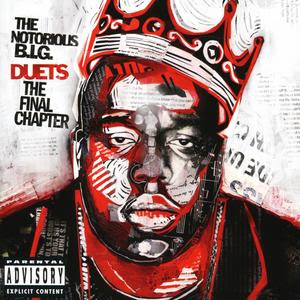
The gangsta subculture exists in tandem with the musical genre of the same name. A derivative subgenre of Hip-Hop, Gangsta took off in the late 80’s and forged its niche with the help of musical artists like Dr. Dre in the early 90’s. The subject of Gangsta music often deals with the issues of inner-city life and the associated difficulties. Schooly D, a Philadelphia based artist is credited with introducing the term ‘gangsta’ in 1984 with his single “Gangster Boogie.” The early 90’s saw a majority of hip-hop and rap musicians moving into this style, quickly popularized for its hard-hitting, aggressive, and typically socio-political lyrics, usually revolving around street violence, poverty, and gunplay. Some of the early artists to forge in this genre were Ice T, Sir Jinx, Kool G Rap, N.W.A., and the Beastie Boys, although many tend not to classify them as true gangsta rappers.
The rise of the Bad Boy Records label signaled a key stylistic change in gangsta rap, as it morphed into yet a new subgenre of hip hop which was destined to become even more commercially successful. Notorious B.I.G. is seen by many to have contributed to the pop chart domination by gangsta rap, as he was the first hardcore gangsta rapper to produce albums as a calculated attempt to include both the gritty, realistic gangsta narratives and the more polished, catchy, danceable pop productions aimed at the clubs and at the mainstream pop charts.
Today, gangsta rap in the mainstream has experienced a decline in popularity, due heavily to the relentless aggression and ridicule directed at the depiction of women and the black community in this musical style.
Submitted by: Nickolas JamiesonGrime
Grime is a subculture which is still developing and is relatively new, emerging only in the 2000s. The grime subculture primarily stems from hip hop, but also has roots in electric dancehall, drum and bass and dub culture. Emerging from the popularity of the UK Garage scene, grime music also referred to as “dub step”, or “two step” was born in East London. The music has a fast paced, electronic gritty sound.
The artists who make it usually rise to popularity by proving their abilities on an underground level which is due to its close connections with traditional hip-hop as well as pirate radio. The Grime scene caught the mainstream’s attention with the release of Dizzee Rascal’s “Boy in da Corner” album, in 2003. More recently Lady Sovereign has broken into North America’s public eye. The style of dress for members of the grime scene is usually very baggy clothing (hoodies and jeans).
Submitted by: Jarett SitterGamers
Gamers as an alternative culture generally relates to those who spend the majority of their leisure time (and often even time that's not) playing games and probably talking about games, reading about games, listening to video game soundtracks, preparing for games or making games.
Traditionally this refers to those who play pen and paper Role-Playing-Games of the style of Dungeons and Dragons, but the population of defining games has grown to encompass a broader population of games such as video games and many other real-world games. This has, however, generated subdivions within the community of gamers, dividing the casual gamers from the hardcore gamers, the competitive gamers from the game hackers and the cyberathletes, video gamers from tabletop gamers and proxy gamers, and retrogamers from import gamers and standard gamers. All of these subdivisions can be divided by the type of games that they play.
In its infancy, the gamer culture was and sometimes still is far more restrictive in accepting those who spend less of their time devoted to gaming or casual gamers as "true" gamers. The style of gamers is generally defined by the games themselves, but uniquely identifying visual styles of the gamer culture includes the pixelated and 8-bit/16-bit/32-bit sprite look as seen in popular web-comics such as
8-bit theatre, which comes from the limited/pixelated visual representation generated by low resolution displays and has become associated with video games because these representations were most commonly seen by the public in the form of video games. Other visual styles identified with gamers are often identified as fantasy because of the style of representation used by the
Wizards of the Coast in their
Dungeons and Dragons material or as
J-pop,
Anime or
Otaku because of the close relationship between the
anime and
manga style of representation used in Japan and the fact that a large majority of video games are from Japan and that this style translates into the games.
Gamer communities are generally centred around the games themselves but do include those that discuss the gamers and game industry in magazines and online such as in
penny arcade.
Source:
Wikipedia and personal testimonial.
Submitted by: Scott Kovacs
Cannabis Culture
As cannabis use has become more prominent in society so has the idea of a cannabis sub-culture. Cannabis culture has been shaped by pop culture, especially relating to film and music, and due to its ever growing wide spread use several political and parties and organizations have come to be affiliated with the cannabis culture. A vital point of the subculture is that is so wide spread as well as ethnically and gender diverse that it is difficult to call it a “sub-culture” as it is becoming more and more mainstream.
Due to marijuana being illegal in most parts of the world a unified “legalize it” trend has occurred and groups many pot users together. Criminalizing cannabis and cannabis users has been viewed as futile and senseless and has strengthened the group and culture. Cannabis culture emerged mostly out of the 196o’s free love and hippie era though its demographic has grown an pot smokers range from as young as 12 to as old as 80. It has even been legalized in situations for medicinal purposes.
In modern culture cannabis is related to many music genres and film/hip design trends. Stoner films and teen films all deal prolifically with marijuana and almost all rock, metal, rap, hip hop, r&b, Rastafarian, even jazz and blues musicians have all frequently admitted t smoking the drug. So cannabis culture is such a large and diverse group of people that many question how much longer it could be viewed as a sub-culture, and many eagerly await its universal legalization.
Submitted by: Nate WagenaarBody Modification and Tattoo Photo credit: Tim Lambesis of As I Lay Dying
Today in society, this deeply personal form of self-expression has reached its own level of individuality, as unique as the tattoo artist and tattooed. Tattoos are one of the oldest forms of body modification.
Today, the collective view of contemporary tattooing is undergoing a change by American culture due to the efforts of committed individuals; this impression of tattooing is changing. It is beginning to be viewed as an art form centered in a minor art world with a clear relationship to the artistic endeavors of the larger social world.
SourceSubmitted by: Brendan CoffeyHippies
Born of the 1960's revolution against the norm, the speak when spoken to rhetoric that had existed for so many generations. Men suddenly began wearing long hair and growing wild beards; youngsters dressed like peasant folk and wore bright, psychadelic colours. everyone looked dirty and unkempt, bathing, afterall, was for the bourgeois.
The generation gap that was created between parents and children became immense, and no one above the age of 35 or so could even comprehend, even fathom the changes that were happening in popular culture and society. a new, gain-ridden grungy sound emerged in music, rock and roll took a turn for some of the most experimental periods in musical history. it came as no surprise that certain bands that had gained popularity earlier in the late 50's and early 60's were now changing their mindset to form to the experimentation in drugs and culture. The Beatles, Jefferson Airplane, Jimi Hendrix, Eric Clapton and Pink Floyd were all born and reborn in these hippy times, and some of the world's most wonderful music followed.
It all culminated to the summer of love, 1969, years of oppression and conformity were thrown to the wind so that the kids could be free. At woodstock, folk music and brazen guitar solos trumpeted out to the baked audienced, stewing in their own sense of purpose and a lot of LSD. the hippy lifestyle has no bounds, depends upon peace and love and caters only to those willing to take a plunge and explore your own mind's eye.
Then, all at once, as quickly as it came about, when the change was cemented and the society changed course, the hippy died, and the metal moved in. Fashion, music, opinion, interest; all of it changed forever because of the refusal of a small group of baby-boomers to follow in the steps of their mothers and fathers.
Many claim to be hippies today, but the title is as redundant in today's culture as the term "punk" or "ska" or "grunge". there simply are no hippies anymore, no room in this trendy and narcissistic culture we've come to know, and thats truly sad.
Trekkies
Trekkies are a subculture composed of highly enthusiastic, perhaps obsessive fans of the fictional Star-Trek universe. The term is thought to have been coined by science fiction editor Art Saha when he saw a few fans of the first season of Star Trek wearing pointy ears (a characteristic of the series’ Vulcan race) at a science fiction convention. Trekkies typically dress in outfits based those seen in the
series, ranging from simple Starfleet uniforms, to more outlandish Klingon costumes. Normally this occurs exclusively within the confines of various science fiction or Star Trek conventions, though there are exceptions (notably Barbara Adams, a juror who wore her Starfleet uniform to court.)
In many ways, Trekkies are a more specific subset of the nerd subculture, with an often encyclopedic knowledge of the series and a similar social stigma. Devoted Trekkies frequently learn to speak the fictional Klingon language to degrees varying from rudimentary knowledge of some key words, to full conversational fluency.
Submitted by: Cody HeraufB-Boyz and B-girlz
B-Boys and B-girls are devotees of hip-hop culture, according to
Wikipedia. It makes sense then that their visual sensibilities would be based on graffiti, African art, and other aspects of hip-hop culture. Unlike some hip-hop art, though, b-boy art always places an emphasis on the human form, usually depicting a b-boy or b-girl in a dynamic pose (like the one below).

Like all forms of hip-hop art, b-boy art readily borrows from other rising artistic movements, and adapts accordingly. For example, some current examples of B-Boy art show a strong Asian influence, as Asian culture becomes more main-stream in North America.
Submitted by: Allen BevansCyber Culture
Cyber culture is a subculture which stems from various underground music and social scenes such as rave and goth. Cyber fashions are influenced by cyberpunk, rave and goth, with those leaning towards the goth end being referred to as "cybergoths" and those leaning towards the trance/hard dance music being referred to as "cyberkids". The subculture as a whole is characterized by an interest in fashion, clubbing, and electronic music. It is also characterized by an interest in emergent techonologies, as well as their effects on society.
Some common themes in cyber fashion include the use of high contrast colours, such as black and white, neon and UV-reactive materials, vibrantly coloured and stylized hair (often with extensions, braids and other paraphenalia), large shoes or boots, body mod, and superfluous accessories such as goggles. There is also usually a strong androgynous element, with cyberpunk and anime influences as well.
Cyber culture is primarily centred around the internet and nightlife, being closely associated with specific clubs in the UK and US.
All info was taken from Wikipedia.
Submitted by: Dave GerhartBohemianism
Bohemianism is a term used to describe the non-conventional lifestyle of artists, actors, writers and musicians of the nineteenth century. Cafés, Music, drugs and alcohol were key activities associated with the Bohemian lifestyle.
“The term ‘bohemian’ has come to be very commonly accepted in our day as the description of a certain kind of literary gypsy, no matter in what language he speaks, or what city he inhabits .... A bohemian is simply an artist or litterateur who, consciously or unconsciously, secedes from conventionality in life and in
art.” (Westminster Review, 1862)
Submitted by: Tamara CraftConspiracy Theorists
AKA ‘conspiraloons, ‘tinfoil hatters’, ‘loonspuds’, ‘fruit’n’jobs’ etc.
The phrase “conspiracy theory” first appeared in the 1920s in an economic article, although it’s popularity did not arise until the 1960s (and added to the Oxford dictionary in 1997).
The term “conspiracy theory” itself is a termed used by popular culture to identify a type of folklore or urban legend. It is the idea that people (conspiracy theorists) try to identify causes of events or series of events usually political, social or historical.
“The term “conspiracy theory” may be a neutral descriptor for any conspiracy claim. To conspire means “to join in a secret agreement to do an unlawful or wrongful act or to use such means to accomplish a lawful end.”” (Wikipedia)

Famous conspiracies include;
- JFK murder
- NASA’s moon landing
- Area 51
- 9/11
- Mars; the ‘face’ hill
- and some of the oldest being the Illuminati or Freemasons

In the past decade the idea of conspiracy theories have hit mass media (especially movies). ‘Conspiracy Theory’ (1997), ‘National Treasure’ (2004) and ‘Da Vinci Code’ (2006) to name a few.
10 Characteristics of conspiracy theorists1. Arrogance. They are always fact-seekers, questioners, people who are trying to discover the truth: sceptics are always "sheep", patsies for Messrs Bush and Blair etc.
2. Relentlessness. They will always go on and on about a conspiracy no matter how little evidence they have to go on or how much of what they have is simply discredited. (Moreover, as per 1. above, even if you listen to them ninety-eight times, the ninety-ninth time, when you say "no thanks", you'll be called a "sheep" again.) Additionally, they have no capacity for precis whatsoever. They go on and on at enormous length.
3. Inability to answer questions. For people who loudly advertise their determination to the principle of questioning everything, they're pretty poor at answering direct questions from sceptics about the claims that they make.
4. Fondness for certain stock phrases. These include Cicero's "cui bono?" (of which it can be said that Cicero understood the importance of having evidence to back it up) and Conan Doyle's "once we have eliminated the impossible, whatever remains, however unlikely, must be the truth". What these phrases have in common is that they are attempts to absolve themselves from any responsibility to produce positive, hard evidence themselves: you simply "eliminate the impossible" (i.e. say the official account can't stand scrutiny) which means that the wild allegation of your choice, based on "cui bono?" (which is always the government) is therefore the truth.
5. Inability to employ or understand Occam's Razor. Aided by the principle in 4. above, conspiracy theorists never notice that the small inconsistencies in the accounts which they reject are dwarfed by the enormous, gaping holes in logic, likelihood and evidence in any alternative account.
6. Inability to tell good evidence from bad. Conspiracy theorists have no place for peer-review, for scientific knowledge, for the respectability of sources. The fact that a claim has been made by anybody, anywhere, is enough for them to reproduce it and demand that the questions it raises be answered, as if intellectual enquiry were a matter of responding to every rumour. While they do this, of course, they will claim to have "open minds" and abuse the sceptics for apparently lacking same.
7. Inability to withdraw. It's a rare day indeed when a conspiracy theorist admits that a claim they have made has turned out to be without foundation, whether it be the overall claim itself or any of the evidence produced to support it. Moreover they have a liking (see 3. above) for the technique of avoiding discussion of their claims by "swamping" - piling on a whole lot more material rather than respond to the objections sceptics make to the previous lot.
8. Leaping to conclusions. Conspiracy theorists are very keen indeed to declare the "official" account totally discredited without having remotely enough cause so to do. Of course this enables them to wheel on the Conan Doyle quote as in 4. above. Small inconsistencies in the account of an event, small unanswered questions, small problems in timing of differences in procedure from previous events of the same kind are all more than adequate to declare the "official" account clearly and definitively discredited. It goes without saying that it is not necessary to prove that these inconsistencies are either relevant, or that they even definitely exist.
9. Using previous conspiracies as evidence to support their claims. This argument invokes scandals like the Birmingham Six, the Bologna station bombings, the Zinoviev letter and so on in order to try and demonstrate that their conspiracy theory should be accorded some weight (because it's “happened before”.) They do not pause to reflect that the conspiracies they are touting are almost always far more unlikely and complicated than the real-life conspiracies with which they make comparison, or that the fact that something might potentially happen does not, in and of itself, make it anything other than extremely unlikely.
10. It's always a conspiracy. And it is, isn't it? No sooner has the body been discovered, the bomb gone off, than the same people are producing the same old stuff, demanding that there are questions which need to be answered, at the same unbearable length. Because the most important thing about these people is that they are people entirely lacking in discrimination. They cannot tell a good theory from a bad one, they cannot tell good evidence from bad evidence and they cannot tell a good source from a bad one. And for that reason, they always come up with the same answer when they ask the same question.
Source: http://www.urban75.org/info/conspiraloons.html)
Websites:
http://www.conspiracyarchives.com/
http://members.tripod.com/mking60/conspiracies.htm
http://skepdic.com/illuminati.html
http://www.masonicinfo.com/conspire.htm
http://www.urban75.org/info/conspiraloons.html
Submitted by: Katherine FriesenWildstyle Priz and Stan, Graffiti Artists, New York City
Wildstyle is a complicated and intricate form of graffiti. Due to its complexity, it is often very hard to read by people who are not familiar with it. Usually, this form of graffiti incorporates interwoven and overlapping letters and shapes. It may include arrows, spikes, and other "decorative" elements depending on the technique used. The numerous layers and shapes make this style extremely difficult to produce homogeneously, which is why developing an original style in this field is seen as one of the greatest artistic challenges to a graffiti writer. Wildstyle "pieces" are also known as "burners" -- meaning "hot" as fire.
Styles of the Wildstyle: Wildstyles commonly include a set of arrows, curves and letters which have been so transformed as to be rendered arcane to the eyes of non-graffiti artists. Many writers have different styles to add to their wildstyle, which gains that writer a good deal of respect within the underground subculture.
Source:
WikipediaThe Words:
A Graffiti GlossarySubmitted by: Michael Jorgensen


